
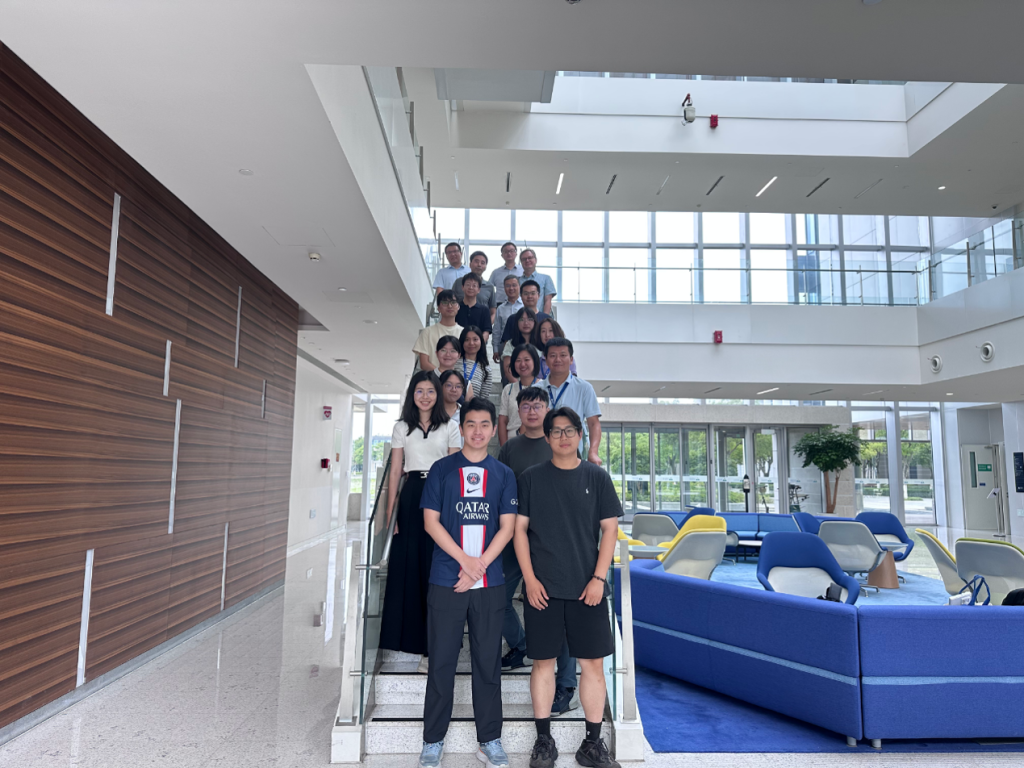
On July 27, 2026, the Duke-DKU Economics Mini-Conference was held at Duke Kunshan University. The event brought together scholars from Duke University, Duke Kunshan University, North Carolina State University, Shanghai Jiao Tong University, and Wuhan University for in-depth discussions on economic topics, including structural transformation, financial market intermediation, technology transfer and economic development, and environmental pollution and public health. The morning session featured four paper presentations followed by Q&A sessions, culminating in a roundtable discussion titled “How to publish in top economics journals and build a vibrant academic career,” which offered young scholars and students a platform that combined academic depth with professional development insights.
The paper presentation session showcased the latest research findings from young scholars across various fields. Despite addressing different issues, the four studies shared a common thread: using theoretical mechanisms, historical experiences, and real-world data to explain the multifaceted pathways of economic development and changes in social welfare.
Focusing on economic structure and resource allocation, Xin Jin, Visiting Assistant Professor at DKU, first presented on China’s structural transformation, highlighting China’s countercyclical manufacturing experience amid global deindustrialization since the 1990s. By constructing and simulating a multi-sector economic growth model, Jin incorporated institutional constraints on cross-sector labor mobility in China into the analytical framework. Preliminary results suggest that labor mobility restrictions may have played a crucial role in shaping China’s unique path of structural transformation.
Qian Wu, Assistant Professor at DKU, presented on the intermediation mechanism of the US Treasury market, analyzing how market makers allocate balance sheet resources between direct holdings and repo financing. Using a theoretical model with market makers, hedge funds, and preferred-habitat investors, the study examined how leverage premium shocks affect the scale of Treasury intermediation, channel allocation, and asset prices. Findings indicated that different types of shocks affect the Treasury market through distinct mechanisms: short-term interest rate shocks primarily affect the overall scale of intermediation, whereas leverage premium shocks further alter intermediary allocation and affect the yield relationship between the cash and repo markets.
The subsequent presentations extended economic analysis to historical development and public health. Peiyuan Li, Assistant Professor at DKU, examined how the détente between China and the West following President Nixon’s 1972 visit to China affected the nation’s economic and social development through technology transfer. Leveraging this geopolitical opening, China ended more than two decades of a technological blockade by introducing 13 large-scale synthetic-ammonia-urea complete equipment sets under the “Four-Three Program”—the largest import of foreign industrial technology since Soviet aid in the 1950s. Using the annual distance from each county to the nearest operational plant as a measure of technological exposure, the study found that counties closer to the plants saw larger increases in per capita grain output, an effect further amplified after the implementation of the Household Responsibility System. Concurrently, these regions experienced demographic transitions, including declining fertility rates and increased years of education, alongside enhanced provision of public goods (healthcare and education) and increased firm entry.
Xiao Wang, Assistant Professor at DKU, examined the intersection of environmental and health economics, presenting on the impact of industrial air lead pollution on infant mortality. Using nationwide US industrial lead emission and infant mortality data from 1988 to 2018, the study treated the interaction between industrial fugitive emissions and local wind speeds as an exogenous instrument to identify the effect of airborne lead concentrations on infant mortality. The research found that even at modern, relatively low levels, increases in airborne lead concentrations significantly raise infant mortality in the first month and first year of life, indicating that both fetal and postnatal lead exposure have critical health impacts. Further cause-of-death analysis showed that air lead pollution increases deaths related to low birth weight, sudden unexplained infant death, and respiratory and neurological diseases. The study estimated that the decline in US industrial air lead emissions since 1988 prevents approximately 307 infant deaths annually, generating health benefits of at least $3.5 billion and underscoring the significant public health value of further controlling industrial lead emissions.
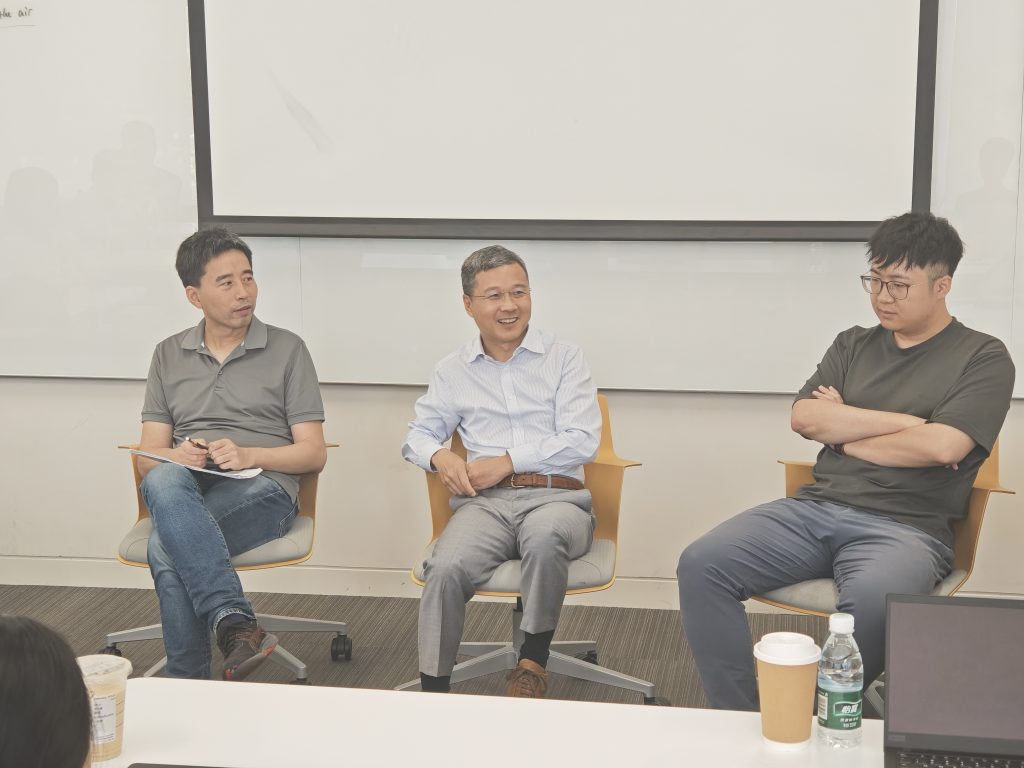
After the paper presentations, the workshop transitioned to a roundtable discussion titled “How to publish in top economics journals and build a vibrant academic career.” Professors Daniel Yi Xu (Duke University), Junjie Zhang (Duke University and DKU), and Zhenxuan Wang (North Carolina State University) shared insights on selecting research directions, publishing papers, preparing for the job market, applying to PhD programs, and academic development in the era of artificial intelligence.
The speakers emphasized that young scholars should gradually develop a coherent, recognizable research agenda. While maintaining academic ambition, they should avoid overly broad topics so the academic community can clearly understand their core expertise and long-term focus. Interdisciplinary research, they noted, does not imply a lack of boundaries; scholars should first establish their primary discipline and research field, maintaining a clearly identifiable main research thread before selectively integrating theories, data, and methods from other disciplines.
The panel also emphasized the importance of research execution and academic communication skills. Young researchers were encouraged to proactively engage with faculty and peers, seek feedback even when research ideas are still in their infancy, and move quickly into data, modeling, and empirical testing to assess the viability of their hypotheses. Collaborating with senior scholars helps students navigate the entire research process—from framing questions and organizing evidence to crafting a compelling narrative, responding to reviewer comments, and achieving publication.
Regarding paper writing and job hunting, the panel emphasized that abstracts and introductions are critical for helping readers quickly grasp a study’s contribution; thus, core questions, identification strategies, and main findings must be presented accurately, clearly, and engagingly. Researchers were also advised to prepare one-minute, five-minute, and fifteen-minute research pitches and to refine their “soft skills” in presentation, Q&A, and on-the-spot communication through repeated practice.
Regarding PhD applications and early academic training, the panel agreed that while grades and rankings are foundational signals, recommendation letters that offer specific, credible, comparative evaluations, along with writing samples that demonstrate independent thinking and original potential, are equally crucial. Whether a recommender genuinely knows the applicant’s research capabilities often matters more than the recommender’s reputation alone.
Addressing the profound changes brought by AI, the panelists noted that while technology may replace certain standardized tasks, it will also create new data sources, research topics, and social science questions. Researchers should focus more on the complex interactions among humans and technology, algorithms and institutions, and technological change and social systems—research that requires systems thinking, creative judgment, and comprehensive analysis, all of which remain difficult to automate.
By integrating frontier paper presentations, live academic commentary, and career development dialogues, this workshop not only showcased the latest research advances in economics at DKU but also further promoted academic exchange among Duke, DKU, and partner institutions. Through open, in-depth discussions, attending faculty and students gained valuable insights into research topic selection, methodological application, academic writing, and long-term academic planning, injecting new momentum into the ongoing effort to build an active, collaborative, and internationally minded economics academic community.
The organizers express their gratitude to the National Natural Science Foundation of China (Project: “Economic and Environmental Impacts of Climate Risk: Theory and Evidence from Chinese Micro-Enterprises”), the DKU Environmental Research Center, and the DKU Division of Social Sciences for jointly sponsoring this workshop.