Skip to content
Search
About
Faculty & Staff
Faculty
Staff
Education
Majors
Signature Work
Alumni Story
Research
Publications
Books
News
Labs
Events
Join Us
About
Faculty & Staff
Faculty
Staff
Education
Majors
Signature Work
Alumni Story
Research
Publications
Books
News
Labs
Events
Join Us
About
Faculty & Staff
Faculty
Staff
Education
Majors
Signature Work
Alumni Story
Research
Publications
Books
News
Labs
Events
Join Us
About
Faculty & Staff
Faculty
Staff
Education
Majors
Signature Work
Alumni Story
Research
Publications
Books
News
Labs
Events
Join Us
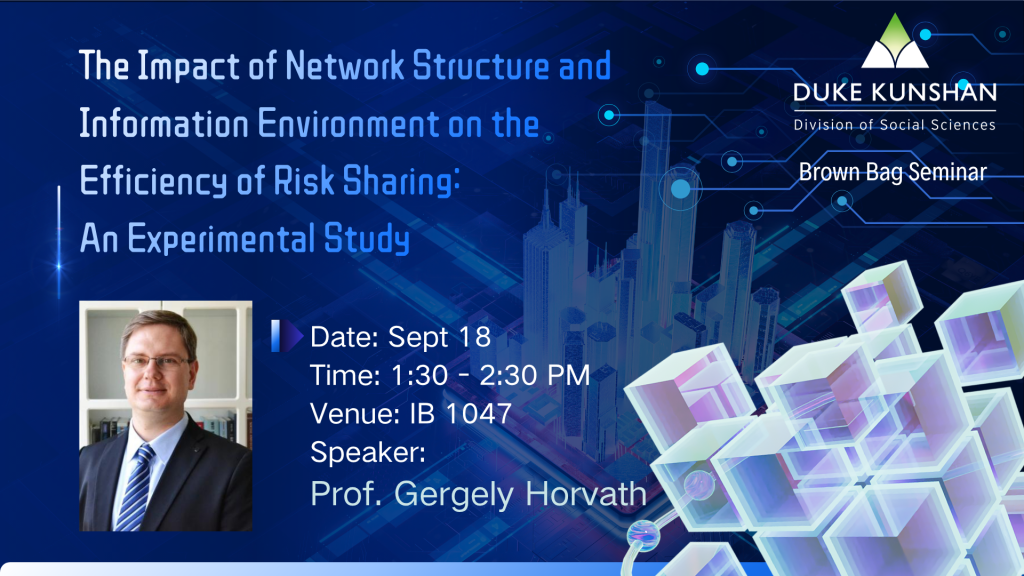
Brown Bag Seminar | The Impact of Network Structure and Information Environment on the Efficiency of Risk Sharing: An Experimental Study
This listing has been expired.
Speaker Bio:
Additional Details
PowerPoint
Speaker's Photo
Video URL